Transcending through time with feminist Oral History
Transcending through time with feminist Oral History
- Article
- Young Women Remember
Estimated reading time: 5 minutes
In this article, Young Women Remember researcher Katie Field explains what Oral History is, and how it has shaped the Young Women Remember digital archive.
As a young woman, I have a litany of questions for the women that came before me − how did we create community even in tough times? How did we come together and create safe spaces for each other to learn and grow?
Imagine if you were given the opportunity to ask other women these questions and create a shared dialogue through time…
Well, that is what a group of us have been working on for the best part of two years now! As a team of young women, we have co-created an Oral History archive of the stories and experiences from women involved in The Young Women’s Movement. It has been incredible to be a part of.
What is Oral History?
Oral History is an academic method of recording memories and experiences, through semi-structured interviews. These oral history interviews are then transcribed to make them fully accessible and stored in archives to inform our understanding of the past. The interviews we have recorded as part of the Young Women Remember project will be shared and preserved through a digital archive we have created together as part of the project. The project has demonstrated to me just how important oral history can be to feminism. It has been an opportunity to centre women, and by doing so, challenge mainstream historical narratives. In the words of feminist Oral Historian Sherna Gluck:
We are affirming that our everyday lives are history. Using an oral tradition, as old as human memory, we are reconstructing our own past.[1]
When we are taught history at school, we are taught about the big events – wars led by men, imperialism, and royalty. Little is said about everyday life and the women doing the work in the background. Having the chance to sit down together, and interview women about their life is empowering. It is taking back that narrative of history as made by men. Throughout the project we heard from women that have made such an impact – from pushing forward policies that protect women in parliament, to teaching women computer skills, and travelling the globe in the name of feminism.
In their own words, they could not have done it alone. The Young Women’s Movement, previously known as the YWCA, provided community and opportunity for these women. Within the interviews, we asked about their journey through the Movement. So many started their involvement by participating in a programme, later volunteered, and some even went on to work for the organisation. This demonstrates how an organisation focused on women can have such a positive ripple effect. Women who were empowered by the programmes went on to empower other women. This has had a lasting and lifelong impact for all the women we interviewed:
‘I mean, there’s absolutely no way I would be able to do the job that I do now without the Young Women’s Movement…’[2]
As a history nerd, I have been curious about oral history for a while, but it was not until I saw the opportunity posted on the Young Women’s Movement website that I had the chance to go and do it myself! We worked as a team every step of the way during this project. From the website design to the questions asked in the interviews, we met up − either in person or online and collaborated. It was my first time working on a project that was completely co-created, where everybody’s ideas were considered before moving forward. It is a radical way of working by removing hierarchies and roles. By doing this, we were brought together, a team of young women across Scotland sharing our own experiences and making connections with each other. Through this process, it created a sense of ownership of our shared history as women in Scotland. A history that we as women have rarely had a chance to participate in.
I have fallen in love with oral history, made lifelong connections, and the stories we uncovered will always inspire me. Thank you to The Young Women’s Movement and The National Lottery Heritage Fund for facilitating this opportunity.
[1] Sherna Gluck, ‘What’s so special about Women? Women’s Oral History’, Frontiers: A journal of Women’s Studies, (1977), 3-17, 3.
[2] Oral History Interview, Emma Crawshaw, April 2024.


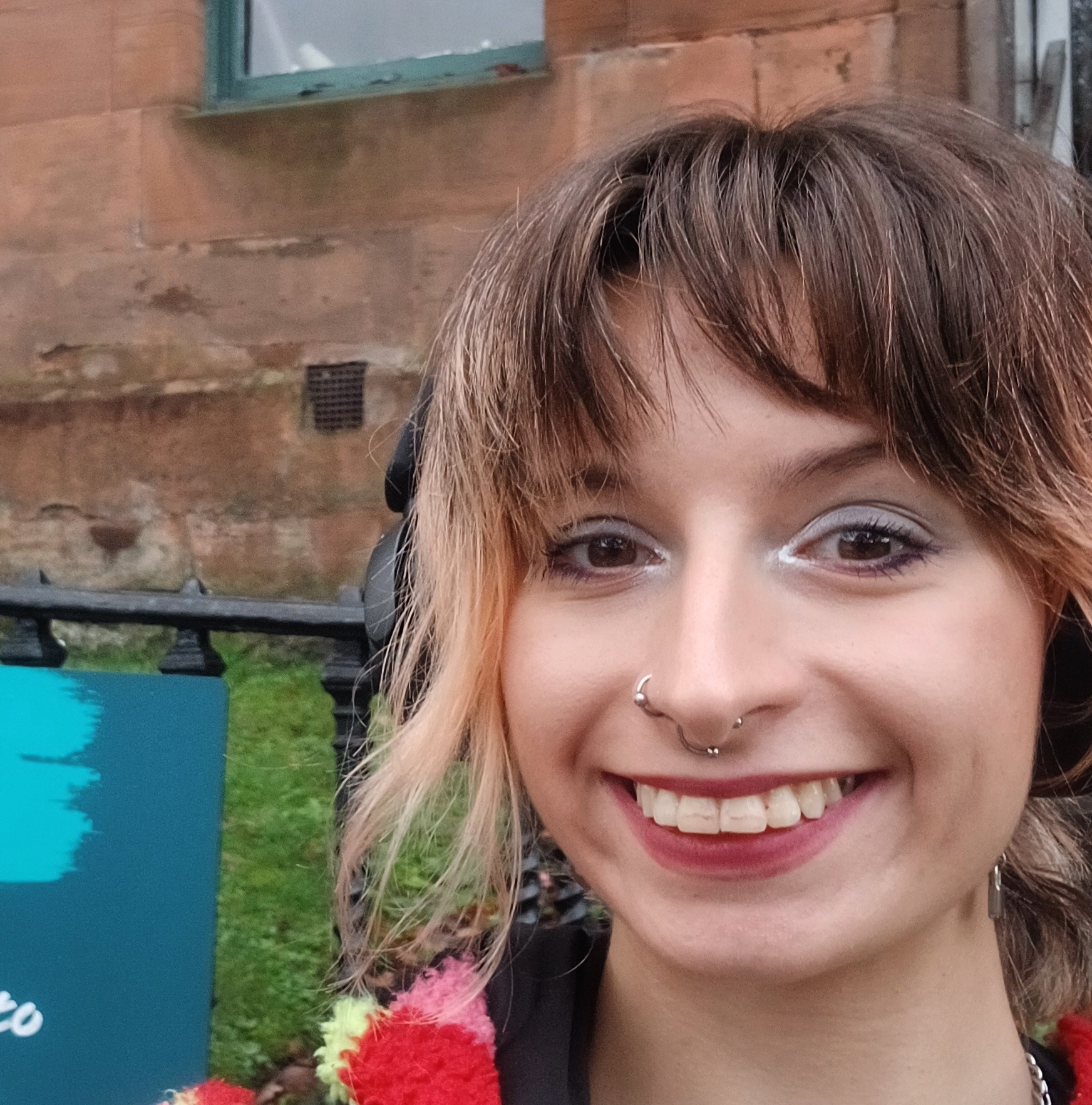
Katie Field
(She/Her), 25, from England, living in Edinburgh
Katie has found working on the Young Women Remember project invigorating from the outset and has especially enjoyed developing new skills in Oral History theory and practice, data analysis and videography.
New to co-design, Katie has found the experience of working with other like-minded women to uncover hidden stories very empowering.
A note from The National Lottery Heritage Fund
The National Lottery Heritage Fund is the largest funder for the UK’s heritage. Using money raised by National Lottery players we support projects that connect people and communities to heritage. Our vision is for heritage to be valued, cared for and sustained for everyone, now and in the future. From historic buildings, our industrial legacy and the natural environment, to collections, traditions, stories and more. Heritage can be anything from the past that people value and want to pass on to future generations. We believe in the power of heritage to ignite the imagination, offer joy and inspiration, and to build pride in place and connection to the past.