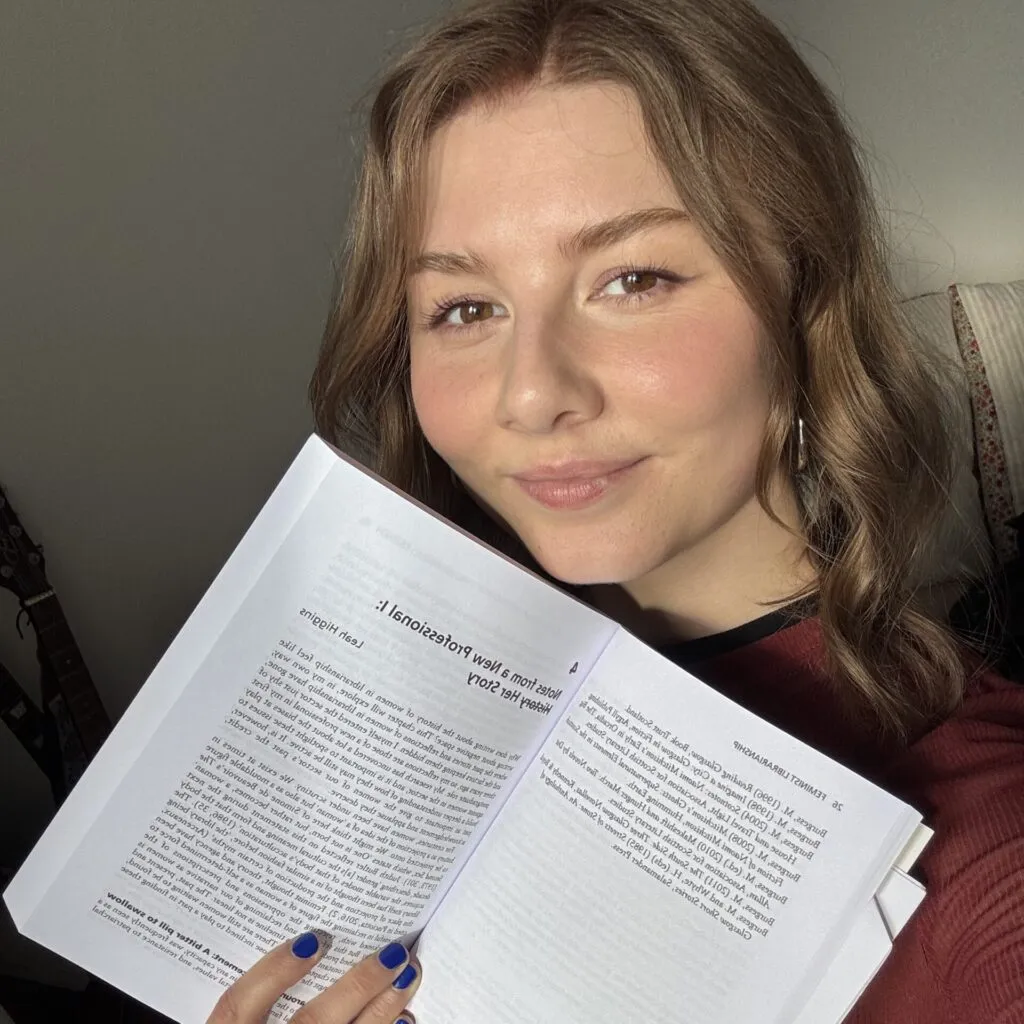
Do you need help SIFTing through the CRAAP post Scottish Election? Let a local feminist library professional help you!
- Education
- Online safety
- Top tips
- Article

Estimated reading time: 8 minutes
The Programme for Government 2026–2031 includes several great commitments for young women and girls in Scotland, from new legislation on misogyny and human rights to continued investment in women’s health and action to tackle VAWG and child poverty. Below, we set out our response to this Programme for Government, the measures we welcome and the gaps that still need to be addressed.
One of the most significant steps forward is the government’s commitment to tackling gender inequality and protecting the rights of people living in Scotland through the introduction of new legislation.
The most promising legislative change is the commitment to introduce a Misogyny Bill in the first year, something that The Young Women’s Movement and the women’s sector have been campaigning towards for over a decade. The Bill will recognise misogyny as a distinct form of prejudice and abuse, recognising violence, harassment, and abuse rooted in hostility to women and girls as serious societal problems. We welcome this commitment and look forward to engaging with the development of the Bill to ensure it delivers meaningful protection from misogynistic abuse and violence for everyone who experiences it.
We are also pleased to see the government’s commitment to protecting the rights of everyone living in Scotland through the development of a Human Rights Bill, which they aim to introduce in the second year of the parliamentary term. We hope this bill will take an intersectional approach, protecting those who need it most and, most importantly, that it will be backed by robust enforcement and accountability mechanisms, ensuring it delivers real social change and equality.
At The Young Women’s Movement, we commend the attention given to VAWG in this Programme for Government and the clear commitment to eradicating it. We particularly welcome the First Minister’s acknowledgment that change is needed in the behaviour of men and boys to address sexism and misogyny. We believe that targeted interventions to challenge and change harmful misogynistic attitudes and behaviours in boys and young men are key to tackling this problem.
We also celebrate the commitment to an Equally Safe Scotland where women and girls live free from all forms of violence, coercive control, abuse and exploitation, and the attitudes that perpetuate such behaviours. A whole-government approach to gender inequality, misogyny and VAWG is essential, and the prevention and early intervention approaches that the government sets out to implement are all steps in the right direction that, with sufficient resource and sustained effort, can deliver real change for women and girls.
Young women and girls in Scotland will also benefit from a government that challenges prejudice and racism in all its forms, particularly at a time when VAWG is being weaponised by racist and anti-migrant groups. We celebrate the government’s recognition that:
“Our country has not been immune from the threats of populism promoted by opportunistic and bad faith actors who aim to stoke division, hatred, and harm – often directed squarely at the most marginalised groups and falsely claiming to protect women and girls.”
Some specific measures that we believe constitute steps in the right direction towards ending VAWG are:
We are particularly pleased about the government’s acknowledgement that new forms of violence against women are growing due to our increasingly digital world, and its commitment to tackling tech-enabled violence against women and girls. The government’s public health approach to online safety is also very welcome, and we look forward to more development on what this practically looks like for Scotland.
Tackling digital VAWG effectively requires investment in research to better understand these harms, so that the government can take evidence-based approaches to digital violence. Our own research, Status of Young Women in Scotland 2026 is a good example of the kind of groundwork needed to develop specific solutions relevant to young women and girls in Scotland. We believe this evidence should inform the development of an Equally Safe Online Strategy and action plan, helping to turn this commitment into real-world change for women and girls
We are very pleased to see the government’s continued long-term commitment to women’s health through the implementation of the second phase of the Women’s Health Plan and the National Plan for Gynaecology, backed by £13 million of investment to reduce waiting times, alongside investment in research in women’s health, particularly menstrual health. We are also reassured by the government’s intentions to carry out a much needed independent review of maternity services, which will focus on care for women in remote communities, and for women at greater risk of poorer outcomes, including Black and Asian women, the Gypsy/Traveller community, and women experiencing multiple disadvantages.
Eradicating child poverty has been set as the definitive mission of this government. We are encouraged by this commitment as we believe that eradicating child poverty will also contribute to reducing women’s poverty. With nine in ten single-parent families headed by women2, children’s poverty is inextricably linked to women’s poverty and to violence against women and girls. Proposed measures such as increasing the Scottish Child Payment to £40 per week for eligible babies under one, are welcome steps in the right direction.
We also strongly welcome the government’s commitment to expanding childcare provision. Affordable, flexible and accessible childcare is not only a child poverty measure but is critical to enabling women’s participation in education, training and employment.
However, childcare expansion must be designed around the realities of women’s lives, including the needs of young mothers, women in low-paid and insecure work, student parents and those living in rural communities.
The government has committed to tackling the cost of living crisis experienced by the whole population, but felt particularly acutely by young women who are unemployed or in precarious working situations. Measures such as increased support with fuel bills, lower public transport fares and legal price ceilings on essential food items may provide temporary relief for those who need it most, but they remain partial responses to more deeply engrained social and economic inequalities.
We would like to see far greater ambition for systemic change to achieve social and economic equality delivered through a truly radical overhaul of social security and taxation. We cannot eradicate gender inequality without tackling poverty and the cost –of living crisis in a more transformative way.
There are some gaps in the Programme for Government when it comes to protecting and advancing the rights of young women.
A key ask in our Young Women Demand manifesto was a commitment to equal opportunities for young women and girls to get involved in politics, democracy and decision-making. We were disappointed that the programme for government does not name democratic participation of young women and girls as a necessary aspect of achieving gender equality. Representation and voice in decision-making should be recognised as essential to gender equality, and engagement initiatives for young women and girls deserve sustained support and investment.
The programme does not recognise the key role of the youth work sector in eradicating VAWG and delivering prevention initiatives. Youth work is a critical delivery mechanism for early intervention and prevention work, particularly the targeted work with boys and young men that the government has committed to pursuing.
Sustainable funding for youth work services is also not explicitly highlighted in the government’s commitments. VAWG prevention work cannot be delivered without secure, multi-year investment in the youth work sector that carries out this vital prevention work.
Our Young Women Demand manifesto also called for the advancement of reproductive rights and we’re very concerned on the lack of commitment to abortion law reform and improving abortion care in the Programme for Government. We will continue to call for the introduction of a modern abortion framework that recognises abortion as part of everyday healthcare for women, rather than continuing to regulate it under existing and outdated criminal law.
Despite these gaps, this Programme for Government makes us hopeful. The government’s intention to work towards the eradication of violence against women and girls in all its forms, its commitment to combat racism and misogyny, and its investment in women’s health are all signs of a government that recognises the challenges facing young women and is willing to take them seriously.
However, ambition alone will not deliver change. The success of these commitments will depend on clear implementation plans, meaningful engagement with women and girls, long-term and sustainable investment, and robust accountability mechanisms. Too often, promising commitments have not been matched by the resources, urgency or accountability needed to achieve lasting change.
Young women cannot afford for these commitments to remain aspirations. We need to see measurable outcomes, transparent reporting on progress, and sustained investment in the services and organisations that support women and girls every day.
We welcome the measures set out in this Programme for Government and will continue to work with government and partners to ensure they become a reality for young women and girls across Scotland. At the same time, we will continue to scrutinise progress, amplify the voices of young women and girls, and hold decision-makers accountable for delivering meaningful change through our Young Women Demand programme.
Do you need help SIFTing through the CRAAP post Scottish Election? Let a local feminist library professional help you!
So, with 30 Under 30 nominations being currently open, it felt like the right time to talk about what recognition actually does for young women. Not in abstract terms, but in real ones.
In this article, Young Women Remember researcher Katie Fielding explains what Oral History is, and how it has shaped the Young Women Remember digital archive.
Iona worked on our Young Women Remember digital archive project – read about her experience as a researcher.