In this article, Young Women Demand steering group member Laura explains how young women can make the most of hustings.
- Young Women Demand
- Article
Estimated reading time: 4 minutes
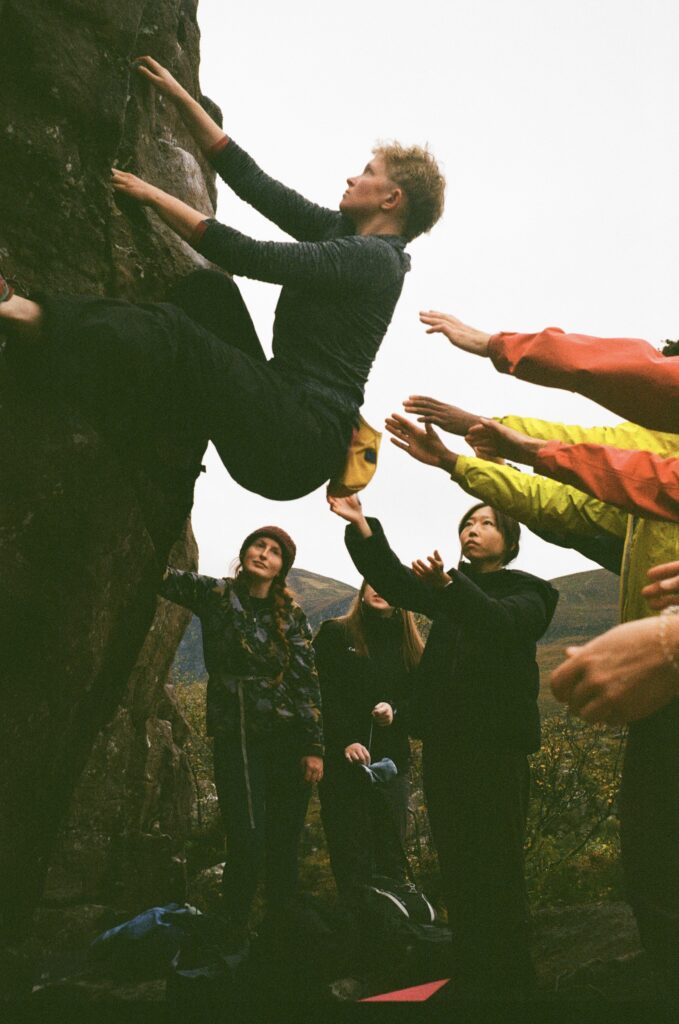
On a sunny day in the Scottish Highlands, I found myself clinging to a tall piece of ancient rock, pressing my climbing shoes as hard as I could into the gritty surface. My fingers were cold in the morning air, doing my best to grip onto the small holds in the surface of the rock. Behind me, the mountains watched impassively as I struggled my way up the surface of the boulder. I knew, as I lifted my leg slowly, trying to find purchase with my foot, that I was going to fall off soon. I could feel my heart rate beginning to increase as the imagined fall turned into a reality. Finally, my foot slipped, and I came away from the boulder, the sky overhead bright and blue, and the mountain air filling my lungs like cold water as I gasped in shock.
The familiar clasp of a hand on my shoulder stopped me from stumbling backwards off the bouldering mats. I stumbled a little as I landed, and another pair of hands reached out to steady me. Someone said ‘nice one!’ with such enthusiasm that it quieted the little voice in my head, telling me I’d failed.
The first time I stepped into a climbing gym as an adult, I was terrified. This was, in part, due to my fear of heights, but it was also because I was moving into a new and unfamiliar space. Around me, groups of men were chatting while their friends climbed, and a handful of women were also making moves on the wall – all of which looked impossible to me as a beginner climber. Luckily, I wasn’t alone in this new space, and I had a friend with me who showed me the way and helped me become more confident in my climbing and even in just being at the wall.
The memory of this experience, the apprehension that almost held me back from finding a new hobby and community, is part of the reason I joined Grunnd Club. Founded by a team of volunteers, Grunnd Club is a climbing collective for women (cis and trans) and non-binary people across Scotland. Thanks to the club, I’ve made new friends, developed my climbing skills, and gone on trips across Scotland to climb. Discovering this inclusive group has given me a space to learn without judgment and to experience my body as capable rather than scrutinised.
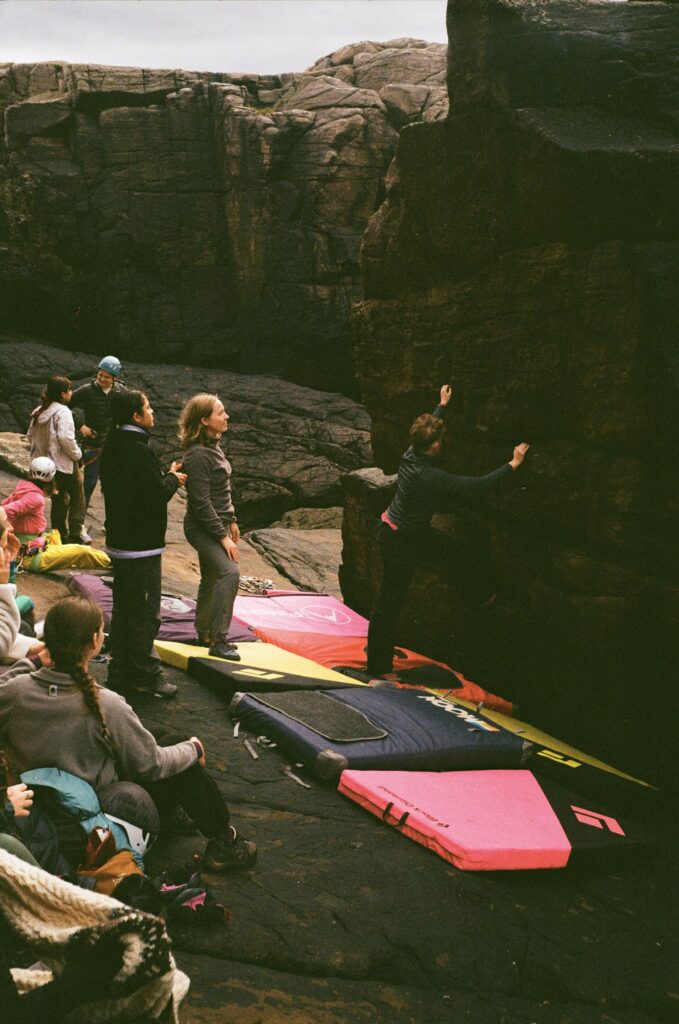
Climbing is often framed as an individual pursuit, but it’s deeply social. When you climb with people, you build relationships based on trust, mutual support, and being seen while you try hard and sometimes fail. In mainstream climbing spaces, those dynamics can be shaped by competition or unspoken hierarchies that don’t always leave room for women, trans, and non-binary climbers to feel safe taking up space. The friendships I’ve built through climbing have developed out of care, shared vulnerability, and turning up for each other without expectation.
I really enjoy climbing. It’s a relatively accessible sport; bouldering, in particular, allows you to take part in a group activity but on your own terms. If it’s something you’ve considered trying but haven’t quite felt confident enough to do, I highly recommend giving it a go. That said, the community I’ve found is really what it’s all about for me. People come along to climb with us for lots of reasons, many wanting to meet new people or just to climb as part of a group, but everyone who comes back does so because when we’re together, we create a space that values community and care.
My friends and fellow climbers are always there to catch me when I fall, to make sure I land on the mats, and to pick me up when I start to doubt myself. With renewed confidence, I turn back to the boulder and decide to try again.


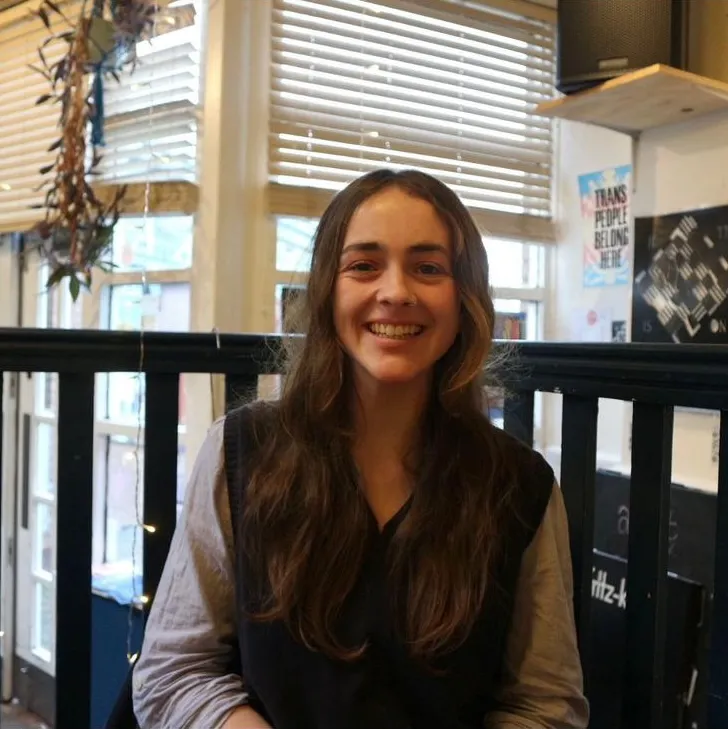
Mel is a committee member of Grunnd Club.
Grunnd Club is a climbing collective for women (cis and trans) and non-binary people across Scotland, organised by a committee of volunteers. You’re welcome, whether you’re new to climbing or have years of experience.
She was also on our 30 Under 30 List in 2020.
Find Grunnd Club on Substack and Instagram.
In this article, Young Women Demand steering group member Laura explains how young women can make the most of hustings.
In this article, Holly Southwick analyses the “girlboss” label for what it is: a tool to make women feel that the system’s not the problem, they are.
This International Women’s Day is poised on the precipice of what could be major political change in Scotland. Despite the advancements in gender equality of the last century or so, this is a challenging time to be a young woman.
On Saturday 14th February, we gathered for our Gender and AI conference… not a single man was present.