In this article, Young Women Demand steering group member Laura explains how young women can make the most of hustings.
- Young Women Demand
- Article

Estimated reading time: 5 minutes
Before this Galentine’s Day, Friday February 13th, I am reflecting on the influence of my women friends on my life. I went to a girls’ school, and so there was a significant period of my life where my only friends were women. Now that I’m at University, that’s not true. However, my friendships with women have influenced me in a profound and lasting way.
I am a patchwork tapestry of all my friends stitched together and interwoven over time. There are fading edges at the corners and fraying threads, the memories of friends who are no longer in my life, but they live on within me. I still have love reserved for them. All my friends exist in me, and I in them. They exist in my interests; in my long-lasting love of female-fronted punk bands, my newfound love of pole dancing, in knitting, in Gothic horror novels and in Judith Butler’s books. They exist in my mannerisms; my tendency to greet strangers with a hug, crack my knuckles, doodle, and even in my idiolect, my borrowing of their linguistic idiosyncrasies. They exist in my choices: in my stomping around in big combat boots, band tees, and smudgy eyeshadow. They exist in my home – not only in scrapbooks or pictures on my walls, but in my set of ceramic mugs, the red ribbon fixed to my wall, my Scrabble pieces, even the wine stain on my sofa that we all failed to scrub out. Our cherished memories are embedded within these objects, and in me.
Despite the vital importance of my friendships, friendships among women in literature fall flat to me. Men’s friendships, by contrast, are far more intricate and complicated. Perhaps the issue is that there are fewer women than men characters on screen, and, comparatively, far fewer fully fleshed women characters. Where there is a woman, she is usually relegated to the role of love interest to her more dynamic male counterparts – who dominate the narrative. The fact is that of my favourite films and novels, when I think of my favourite friendships, they are almost always male.
I remember, in my final year of school, I attended Literature Society and one of our meetings happened to fall on February 13th. As it was an all-girls school, we decided on Galentine’s Day, and women’s friendships in literature as the theme of the event – but when it came to the discussion, we floundered. The theme was not the issue, but the absence of compelling and empowering depictions of female friendships in literature. At the end of the hour, our better examples were the March sisters, of Louisa May Alcott’s Little Women, and Emma and Harriett, of Jane Austen’s Emma. However, both of these examples were dissatisfactory.
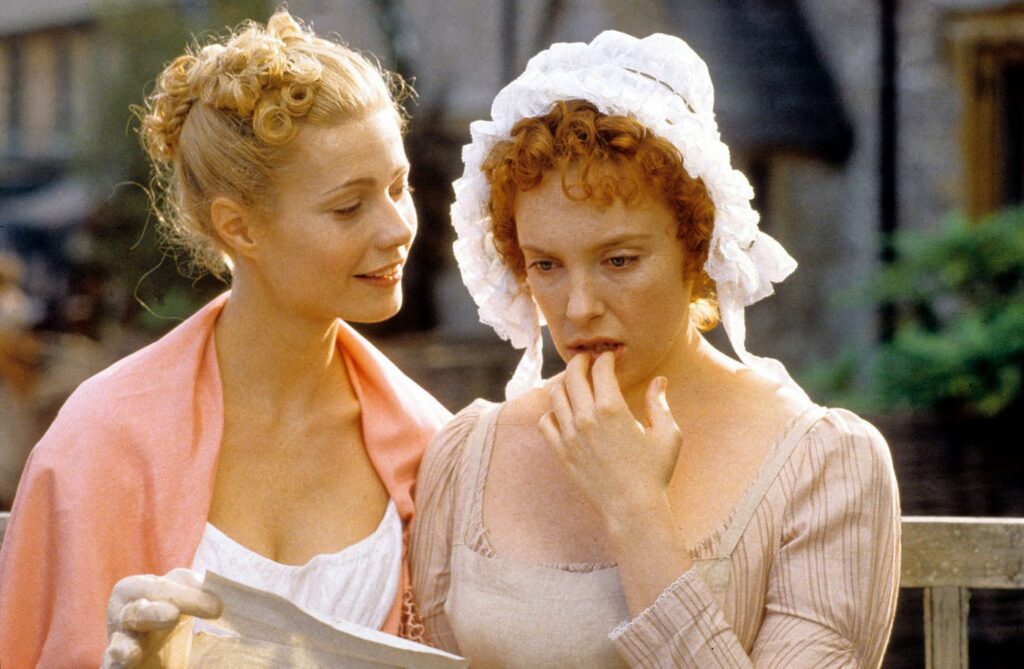
Emma (1996)
The March sisters, of course, were sisters before they were friends, so they can be discounted. More so, Emma and Harriet’s friendship has a very uneven power dynamic, due to their differences in social class. Emma and Harriet’s friendship was initially founded on Emma’s loneliness and need for control as Emma adopts Harriet for companionship – rather than arising naturally. The friendship between Emma and Harriet is tinged at times by bitterness and resentment as both women fall for Mr Knightley. Whilst, Harriet, finally, asserts her own independence and Emma expresses remorse for interfering in Harriet’s love life, it is nonetheless valid to say that their friendship has problematic elements.
My hope for the future is that we will finally see more well-rounded depictions of women’s friendships in the media. I long to see depictions of women’s friendship that recognise fully the human need for friendship, community, and connection – a need that seems, in literature, to feel reserved only for men.
Whilst the March sisters were sisters, their sisterhood is complex. The sisters are imperfect and their strong personalities often clash: Jo’s simplistic and stubborn nature clashes with Meg’s vanity and vehement insistence good manners, Amy’s gentility and over-sensitivity clashes with Jo’s gutsy and freespirited nature, and Beth’s crippling shyness can be isolating. Nevertheless, there is a lasting loyalty and longevity to their sisterhood that is so compelling. Both Meg and Jo work to support the family, who are living in genteel poverty, and as Beth is dying, Jo is devoted to caring for her – abandoning her literary ambitions to do so. I long to see female friendships represented with the same quiet power as the March sisters.
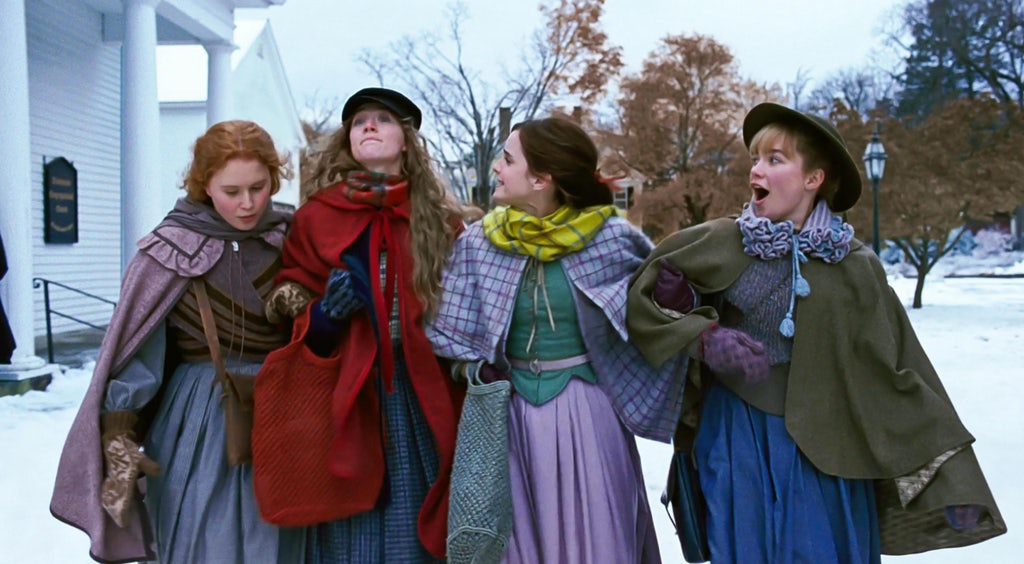
Little Women (2019)
The fact is that I cannot forge an identity independent from my friends, the people in my life. I do not stand on my own two feet, and I reject the notion that anybody can. We were never supposed to be so overworked, working 9-5 in an office, and with the rise of social-media echo chambers, loneliness is on the rise.
People need people. I worry about the rise of hyper-independent mindsets that modernity has brought. I won’t pretend to have the answer to this epidemic of loneliness, but I believe to even begin addressing this fully, we need friends and communities. And it is this need for community that I wish to celebrate this Galentine’s day, and carry forward into the next year.


Emma Cook is storyteller and English Literature student at the University of Glasgow. She usually writes about feminist and disability rights issues.
She believes strongly in social justice and is informed by her lived experience of disability in her role as Disability Justice Officer on the Amnesty International Student Action Network. She loves volunteering and supports many grassroots community projects and charity initiatives.
In her free time, she loves going to a gig or curling up with book. She is a massive fan of anything Gothic.
In this article, Young Women Demand steering group member Laura explains how young women can make the most of hustings.
In this article, Holly Southwick analyses the “girlboss” label for what it is: a tool to make women feel that the system’s not the problem, they are.
This International Women’s Day is poised on the precipice of what could be major political change in Scotland. Despite the advancements in gender equality of the last century or so, this is a challenging time to be a young woman.
On Saturday 14th February, we gathered for our Gender and AI conference… not a single man was present.