Read our Young Women’s Movement Response to the Programme for Government 2026-2031!
- Policy
- Rights
- Young Women Demand
- Article
Estimated reading time: 5 minutes
On Saturday 14th February, we gathered for our Gender and AI conference — a day dedicated to exploring how artificial intelligence is already shaping the lives, safety, and opportunities of young women and girls.
Across the day, we explored algorithmic bias, digital harm, image-based abuse, and the invisible ways technology shapes whose voices are heard, whose bodies are policed, and whose futures are prioritised.
The conversations were thoughtful, engaged, and deeply necessary. But as I looked around the room, one thing became increasingly difficult to ignore: not a single man was present.
This absence wasn’t something we had anticipated, nor something we can easily dismiss. Because gender, by definition, concerns everyone. Yet despite deliberate efforts to make the event inclusive and welcoming, no men attended. That gap raises uncomfortable but important questions about how we understand gender, who we believe these conversations are for, and who we expect to carry the responsibility of change.
Too often, “gender” is still read as shorthand for “women.” When we say gender inequality, many people hear women’s inequality. When we say gender-based harm, they hear harm against women. And while women and girls do experience disproportionate levels of discrimination, violence, and exclusion, reducing gender to women alone quietly reinforces the idea that gender justice is women’s work.
In this framing, men can become bystanders. Not because gender doesn’t shape their lives too, but because its harms often land differently, making it easier to step back rather than step in. Gender becomes something women must fix, rather than something society must collectively dismantle and rebuild.
This isn’t just a linguistic issue — it’s a cultural one, shaping who feels responsible. When men do not see themselves reflected in conversations about gender, disengagement becomes easy, even unconscious.
Nowhere is this more visible than in technology and artificial intelligence. Men continue to dominate AI development, data science, software engineering, and leadership roles across the tech sector. According to Interface, women make up just 26% of the global AI workforce, with even lower representation in senior technical and decision-making roles.
If those same men are absent from conversations about bias, harm, and inequality, responsibility falls almost entirely on those already experiencing the greatest risks.
That imbalance matters. AI systems increasingly shape access to housing, healthcare, education, welfare, employment, and justice. Research from MIT Media Lab’s Gender Shades project demonstrates how facial recognition technologies consistently misidentify women with darker skin tones, revealing how bias becomes embedded within seemingly neutral systems.
When gender bias is built into technology, those harms scale rapidly, often invisibly. Without men actively engaging in these conversations, we are left trying to challenge structural inequality without the involvement of those most positioned to disrupt it.
There are no simple answers. For some, gender-based conversations trigger discomfort or defensiveness — a fear of blame, or of saying the wrong thing. For others, there is a belief that these issues simply do not affect them, or that their presence is unnecessary.
Cultural expectations also play a role, with emotional literacy and social justice engagement still coded as feminine, while technological spaces remain coded as masculine. When those worlds meet, many men seem uncertain where they belong.
But disengagement, even when unintentional, carries consequences. Silence is not neutral and absence does not preserve objectivity. Choosing not to participate allows existing inequalities to continue unchallenged.
At the conference, we spoke about intimate image-based abuse, online harassment, and the digital policing of women’s bodies. These are not niche issues. Globally, 58% of girls and young women have experienced some form of online harassment and AI-generated deepfake pornography overwhelmingly targets women.
These harms shape everyday safety, autonomy, and dignity. They influence whose pain is taken seriously, whose labour is valued, and whose identities are considered important.
Despite men’s absence, the conference itself was filled with hope. The room was alive with critical thinking, care, and collective resolve. People shared stories, challenged assumptions, and imagined alternatives. There was a shared recognition that AI does not exist outside society. It absorbs our values and amplifies our biases.
But meaningful change requires collective responsibility.
If we truly want ethical, inclusive, and accountable technologies, then gender justice cannot remain a women-only project. Men must be in the room. Listening, questioning, reflecting, and acting. Not as saviours, and not as silent supporters, but as accountable participants in reshaping the systems from which they benefit.
This requires more than invitations. It requires a cultural shift in how gender is framed, taught, and understood. It requires moving beyond the idea that equality is something granted, and towards the recognition that justice is something built collectively.
The absence of men at our Gender and AI conference did not diminish the importance of the day. But it sharpened its urgency.
Because until gender stops being read as “women,” and equality stops being seen as optional, we will continue asking the same communities to carry the same burdens.
And the futures being coded into our technologies deserve far more collective care than that.


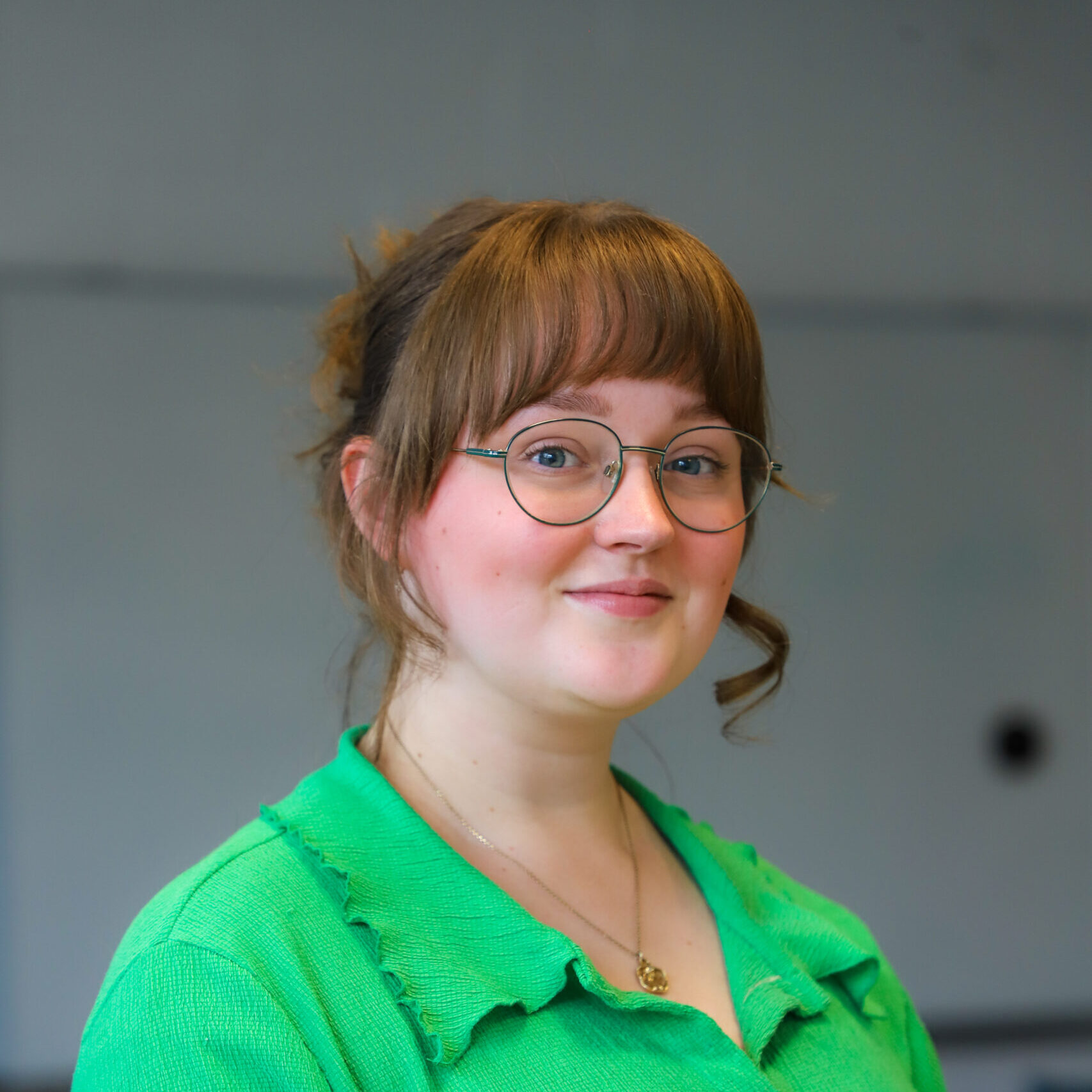
Bethany Spain is a writer and communications specialist working in the third sector, with a focus on community storytelling and social justice.
Alongside her professional work, she volunteers with organisations supporting young people and grassroots activism, and writes about feminism, social mobility, youth voice and wellbeing. She is passionate about building spaces where everyone can feel connected, supported, and heard.
Bethany was on our 2025 30 Under 30 List – find out more about her work.
Read our Young Women’s Movement Response to the Programme for Government 2026-2031!
Do you need help SIFTing through the CRAAP post Scottish Election? Let a local feminist library professional help you!
So, with 30 Under 30 nominations being currently open, it felt like the right time to talk about what recognition actually does for young women. Not in abstract terms, but in real ones.
In this article, Young Women Remember researcher Katie Fielding explains what Oral History is, and how it has shaped the Young Women Remember digital archive.