Andy Burnham’s Premiership: What are the potential impacts for women?
Andy Burnham’s Premiership: What are the potential impacts for women?

- Article
- Policy
- Rights
Estimated reading time: 4 minutes
Andy Burnham has only been Prime Minister (PM) for a short while, but what legislation has he proposed, and what are the likely impacts of this upon women?
Andy Burnham’s Cabinet
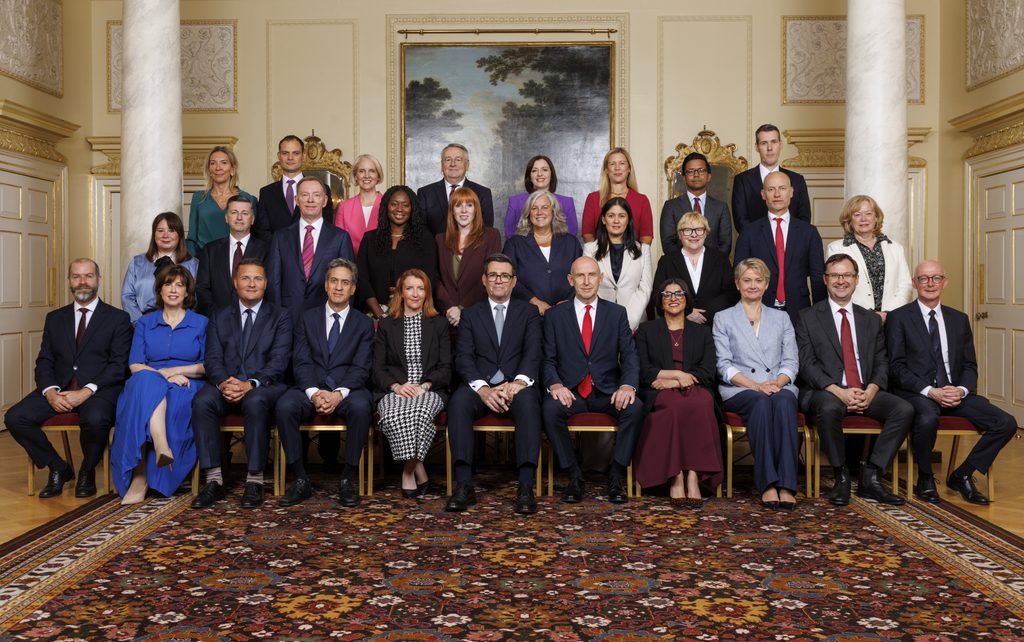
08/09/2026. London, United Kingdom. Prime Minister Andy Burnham poses with his cabinet for the Official Cabinet Photo in the Pillared Room in 10 Downing Street. Picture by Simon Dawson / No 10 Downing Street
The Cabinet is formed of MPs, selected by the Prime Minister, who head government departments known as ministers. It plays an important role in UK politics, as ministers shape and implement legislation within their remit. One such example may be the health secretary or the foreign secretary.
Andy Burnham’s cabinet is half women, a first in the history of British politics. Of the four great offices of state – the Prime Minister, the Chancellor of the Exchequer, the Foreign Secretary and the Home Secretary – just one is held by a woman, with Shabana Mahmood as Home Secretary. Notably, the new Cabinet includes the Minister for Women and Equalities, Bridget Phillipson. Whilst this is not a new position, Phillipson may bring fresh perspective to the role, having previously managed a women’s refuge.
Whilst representation plays an important role in diversity and equality, the legislative decisions of Andy Burnham’s Cabinet will be the true test of parity for women.
Andy Burnham’s Policy So Far
46% of women say they have a favourable few of Andy Burnham versus 32% who say they view him unfavourably. In the short while he has been Prime Minister, Burnham has proposed a large number of policies, from small changes to large scale reforms.
One of Andy Burnham’s key focuses is the cost of living crisis. In his first week as Prime Minister, he announced caps on bus fares in England as well as changes to VAT on electricity bills and business rates. Financial insecurity means that women are more likely to face the impact of the cost of living crisis, often acting as shock absorbers. The impact is even more notable amongst women from ethnic minority backgrounds and disabled women. This is seen as progress by others, but some critics may say that it doesn’t go far enough.
The PM also plans on rolling out reforms to social care, which would see a change to more person-centred care. The impact of this change is more likely to affect women, who are more likely to be unpaid carers. The proposal would also see an increase in the pay of care workers, who are also more likely to be women. In recent weeks, Burnham has made headlines after announcing a new national care service, but again, details of this remain to be seen.
The Prime Minister has experienced some level of controversy over a proposed early release prison scheme. The policy would see some prisoners released after serving just some of their sentence and aims to stop prison overcrowding. Some prisoners would be exempt from the scheme, including rapists and sex offenders. The scheme, as it is currently proposed, would allow for the early release of violent offenders such as murderers and those convicted of domestic violence charges. This is something which has been criticised by organisations including Women’s Aid, over fears about the risk of repeat offending and potential harm to victims. The scheme is as such currently under review.
Looking Forward
The Prime Minister has made some big promises, including “[building] more council homes,” “to end rough sleeping,” and “[helping] more young people into work”. Burnham has also placed large emphasis on devolution, although the likely impact of this on Scottish women remains to be observed. With parliament not long back from summer recess, it is likely the true scope of the new PM’s policies and the consequential impact will not be felt until later this year.
In times of political change, it is important to stay educated on current affairs and issues, and speak out when things don’t feel fair or just.